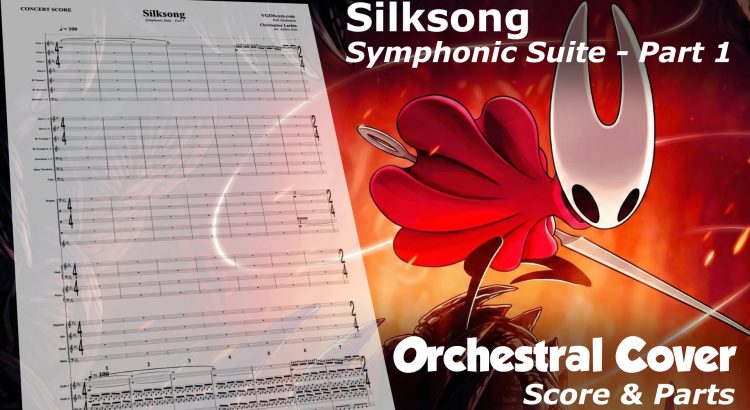
“Silksong Symphonic Suite (Part 1)”
from Hollow Knight: Silksong
Original music by: Christopher Larkin
Arrangement: Andrés Soto
With the release of Hollow Knight: Silksong, the world finally returned to the intricate, hand-drawn depths of Team Cherry’s imagination. But if the first game was defined by the quiet, melancholic decay of Hallownest, Silksong presents a stark contrast: Pharloom is a kingdom of song, silk, and lethal grace. Christopher Larkin’s score reflects this shift brilliantly, trading the somber isolation of the Knight for the vibrant, acrobatic identity of Hornet.
This “Silksong Symphonic Suite (Part 1)” takes that distinct musical identity and translates it into the language of a full orchestra. Rather than a simple medley, the arrangement is structured as a narrative journey through the game’s early chapters. It explores how Larkin’s compositions—often grounded in strings and brass—gain a new cinematic dimension when expanded to a symphonic scale, capturing the grandeur of an ascent that players have waited years to experience.
1. Enter Pharloom
The suite opens with the game’s defining anthem, “Enter Pharloom.” In the original soundtrack, this piece serves as the call to adventure, signaling the start of Hornet’s climb. The symphonic arrangement embraces this function, treating the theme as a majestic overture. It establishes the central motif of the game: a drive upward, filled with confidence and the promise of discovery, setting the stage for the kingdom that lies ahead.
2. Bone Bottom
Moving away from the fanfare of the entrance, the suite transitions into the atmospheric depths of “Bone Bottom.” Christopher Larkin is a master of environmental storytelling through sound, and this track is a prime example of his ability to paint a setting. The arrangement highlights the moody, textural quality of the composition, capturing the sensation of exploring a forgotten, subterranean layer of the world where the danger is present but quiet.
3. Bell Beast
The energy shifts drastically with “Bell Beast.” As one of the early boss themes, this track is characterized by its relentless, driving rhythm. The music embodies the physical threat of a massive adversary, using the density of the ensemble to mirror the chaotic intensity of combat that defines the Hollow Knight experience.
4. Red Maiden
“Red Maiden” introduces a different flavor of combat music. Unlike the brute force of the beasts, this theme possesses a distinct elegance. The composition feels almost like a dance, reflecting a foe that is as agile as they are deadly. The symphonic treatment leans into this sophistication, prioritizing melodic interplay over sheer volume to capture the “lethal grace” that is central to the aesthetic of Silksong.
5. Trobbio
The inclusion of “Trobbio” brings a sense of character and drama to the suite. Known for his flamboyant nature, Trobbio’s theme is inherently theatrical. The music is colorful and expressive, standing out against the darker tones of the soundtrack. The arrangement captures this eccentricity, serving as a spirited bridge that highlights the diverse cast of characters found within Pharloom.
6. Lace
The suite concludes with the theme of “Lace,” Hornet’s recurring rival. This track is synonymous with high-speed dueling and technical precision. As the finale of this first part, the music channels the frantic energy of a clash between equals. It is a fast-paced, aggressive conclusion that leaves the listener on the edge of their seat, much like the encounters with Lace herself.
Conclusion: A Kingdom Reimagined
“Hollow Knight: Silksong Symphonic Suite” is an exploration of how video game music can transcend its medium. By reinterpreting Christopher Larkin’s work for a full symphony, the arrangement underscores the complexity and emotional range of the source material. It is a tribute to a game that has captivated millions, offering a new way to experience the songs of Pharloom—not with a controller in hand, but through the immersive power of an orchestra.